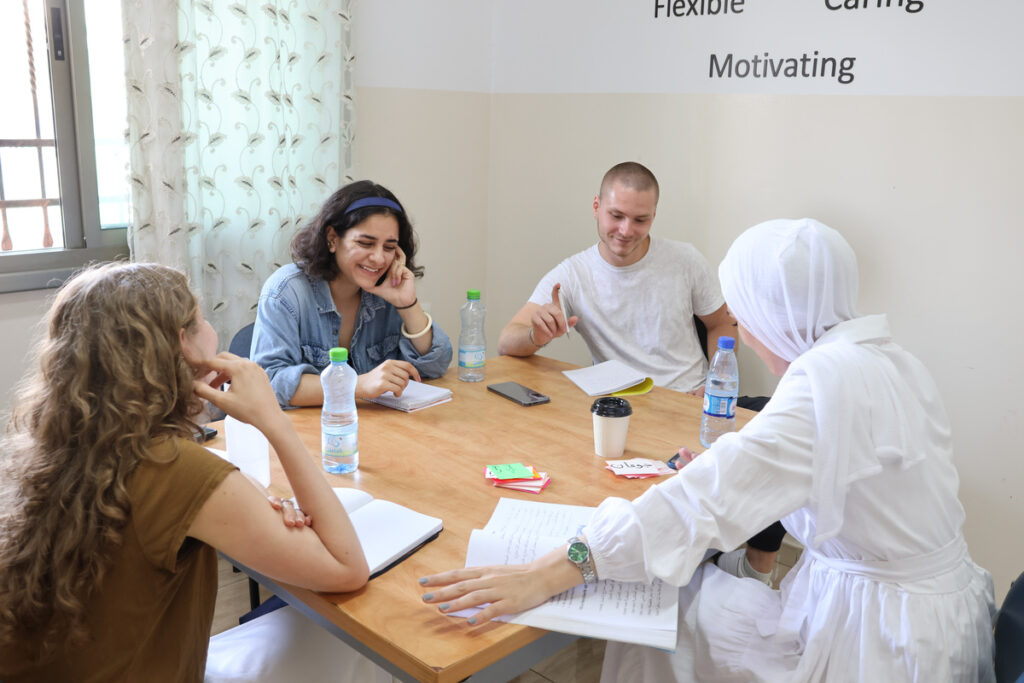
Arabic Programs Abroad in Palestine 2026-2027: Arabic is one of the world’s most widely spoken (and most beautiful) languages. Present across the whole Middle East and North Africa region, and in many diaspora communities across the world, Arabic is a great language to learn for anyone interested in current affairs or getting to know a new culture!
There are a lot of places where you can study Arabic, but we recommend coming to study in Palestine. Why? It is a culturally and historically rich environment, with incredibly welcoming people, and a great option for immersive learning in an Arabic-speaking society. The dialect in Palestine is also closest to Modern Standard Arabic (or MSA), which makes it a really useful one to learn! (We’ll talk more about that later).
Learning any language is hard, but it can be made a lot easier by being immersed in a society that speaks it! Coming to Palestine for Arabic is a great way to really jump-start your learning and get you speaking right away.
Table of Contents
Why Choose Palestine for Arabic Studies?
Authentic Language Immersion
Living and studying in Palestine is a great way to experience a really authentic immersion and improve your language skills quickly. We mentioned dialect earlier, which is one of the biggest considerations when learning Arabic. Do you study Modern Standard Arabic? Do you choose a spoken dialect instead? If your answer is ‘why not both?’, then Palestine is a great choice for you.
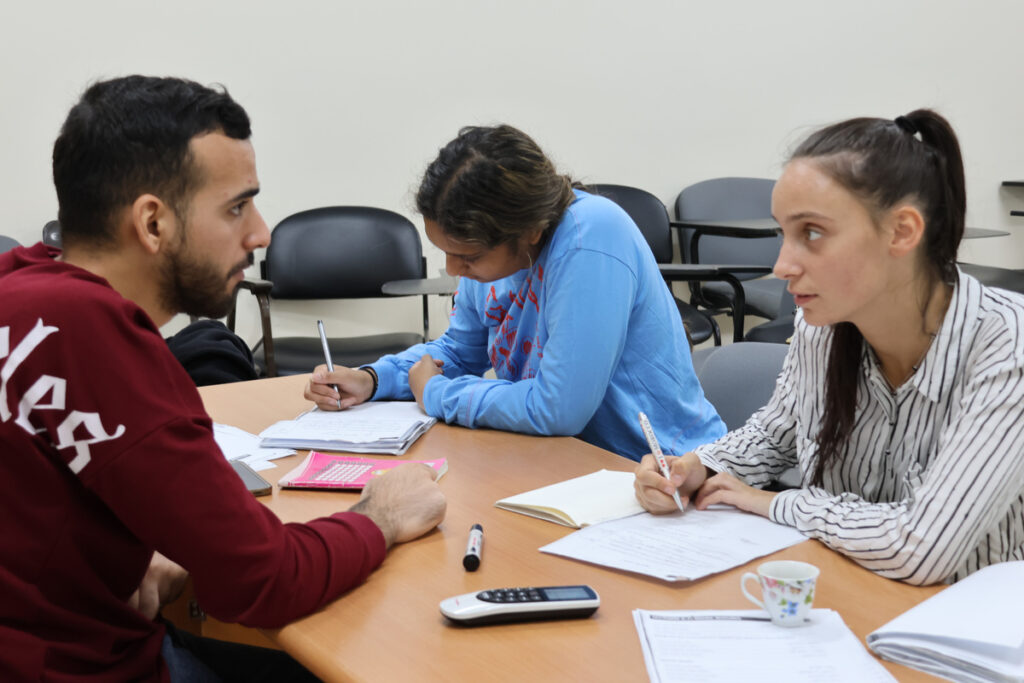
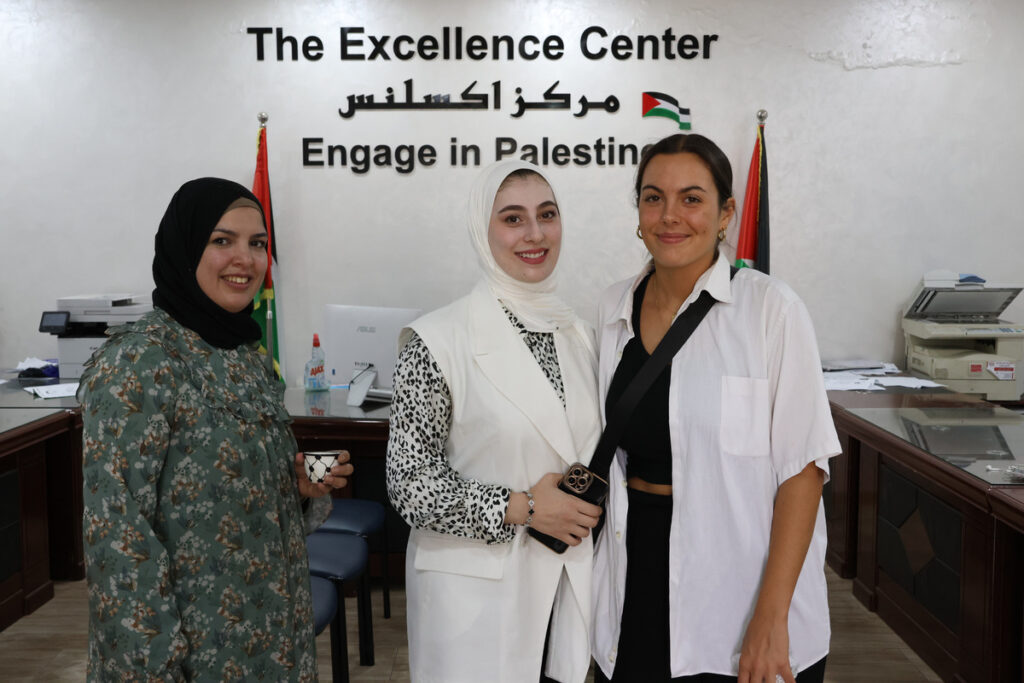
Let’s explore why:
- Exposure to Modern Standard Arabic (MSA) for academic and formal use.
Modern Standard Arabic is the universal Arabic. It is understood by Arabic speakers almost everywhere, and is used for official documents, news, and academia. However, this form of Arabic is very formal and isn’t used for speaking to people in everyday contexts. Having a foundation of MSA is great to help support an understanding of Arabic’s grammar rules, as well as giving you a vocabulary to use if you get stuck across dialects, but it’s no good for a conversation.
- Learning Palestinian Colloquial Arabic (Ammiya) in real-life contexts.
If your language learning goals include speaking with people in everyday situations, learning a dialect is very important. Palestinian Colloquial Arabic (also known as Ammiya) is part of the Levantine (or Shami) Arabic family spoken across Syria, Lebanon, Jordan, and Palestine. Given how widely this dialect is spoken, it’s easily understandable by many other Arabic speakers, making it one of the most useful dialects to have. Ammiya is also the most similar dialect to MSA, so there is less of a difference if you already have foundational MSA or if you’re learning both.
Whatever your language goals, learning Arabic in Palestine is the fastest way to get to where you want to be!
Cultural & Historical Enrichment
Your time studying Arabic will be incredibly enriched by exposure to the local Palestinian culture and day-to-day life.
We’ve already mentioned how welcoming Palestine is. The hospitality of the people here is legendary, and one of the best parts of studying Arabic in Palestine is getting to experience this! Day to day, you can expect people to offer you tea and coffee in the street, receive invitations to meet people’s families, or to have dinner together (especially during Ramadan).
Studying Arabic in Palestine also gives you access to some of the most historically and religiously significant cities in the world. How old, you might ask? We’re talking biblical!
- Hebron: The economic hub of the West Bank, Hebron is a welcoming city with a vibrant shopping and restaurant scene and numerous sites of historical and religious significance. Study Arabic in Hebron for full cultural immersion.
- Ramallah: A more modern and cosmopolitan city, Ramallah is the NGO capital of the West Bank. It boasts many cultural institutions like the Mahmoud Darwish Museum and the tomb of Yasser Arafat. Study Arabic in Ramallah to be in the political center of Palestine.
- Nablus: Tradition meets community in Nablus, one of the northernmost cities in the West Bank. Nablus is a bit quieter than the other options, and is known for its lovely local markets and delicious kunefe (insider tip – buy the kunefe at night!). Study Arabic in Nablus for a calm environment.
- Bethlehem: One of the most religiously significant places in the world, Bethlehem is situated just south of Jerusalem. In this beautiful city, you can visit sites like the Church of the Nativity (where it’s said Jesus Christ was born), and the Milk Grotto. Learn Arabic in Bethlehem to explore historical sites and travel easily to Jerusalem.
Affordable and Accessible Study Options
Another benefit of studying Arabic in Palestine is the cost. Compared to many other in-country destinations, Palestine is a very affordable option. Countries like Jordan, Egypt, and Morocco have a relatively higher cost of living compared to areas in Palestine like Hebron. This makes it a much more accessible option for a wider range of people.
While affordable, it can also be worth looking at options to fund your study in Palestine. If you’re studying, your university might have funding available to subsidise or fully pay for your learning abroad. Some language schools, like Ta Marboota in Tunisia, offer tuition scholarships so you only have to cover your housing, travel, and living costs.
At the Levantine Arabic Institute, accommodation, breakfast, and orientation in Hebron are all covered in your tuition costs. This can be a significant financial help when planning your time away.
Types of Arabic Programs in Palestine (2026-2027)
Intensive Arabic Language Courses
When picking an Arabic program, it’s important to make sure it can fit with your schedule and your language learning goals. For instance, you might consider what intensity level you’d like to do. If you have a short timeframe and a short-term language learning goal for work, you might need an intensive or super-intensive program. If you’ve got more time and want more of a relaxed language learning approach, you might go for a non-intensive option.
It’s also important to consider the focus of your program. Do you want to be able to speak easily to people? Are you more intent on reading and understanding the news? When you know what intensity you want, make sure to pick a program that aligns with your areas of focus.
University-Based Arabic Programs
Some Universities in Palestine, like Birzeit University and An-Najah University, offer courses in Arabic that you can take for a more formal or academic learning environment. These courses might be ideal for someone who would like to study Arabic over the course of an entire semester or during the summer break.
Most Universities will have accommodation options available (usually in addition to the tuition fees), and some may even support scholarships for students coming to learn Arabic from overseas. The benefit of studying at a University is that you can also gain academic credit, which can be helpful for progressing your degree. Academic credit is also available through the Levantine Arabic Institute.
Online & Hybrid Learning Options
Can’t come to Palestine in person? Maybe you want to try out some online learning before you commit to travelling to visit us in person? Don’t worry, we’ve got you covered!
Online learners still get all the benefits of Palestinian Arabic lessons with our talented teachers, and learning about local culture and practices – all from the comfort of their own homes.
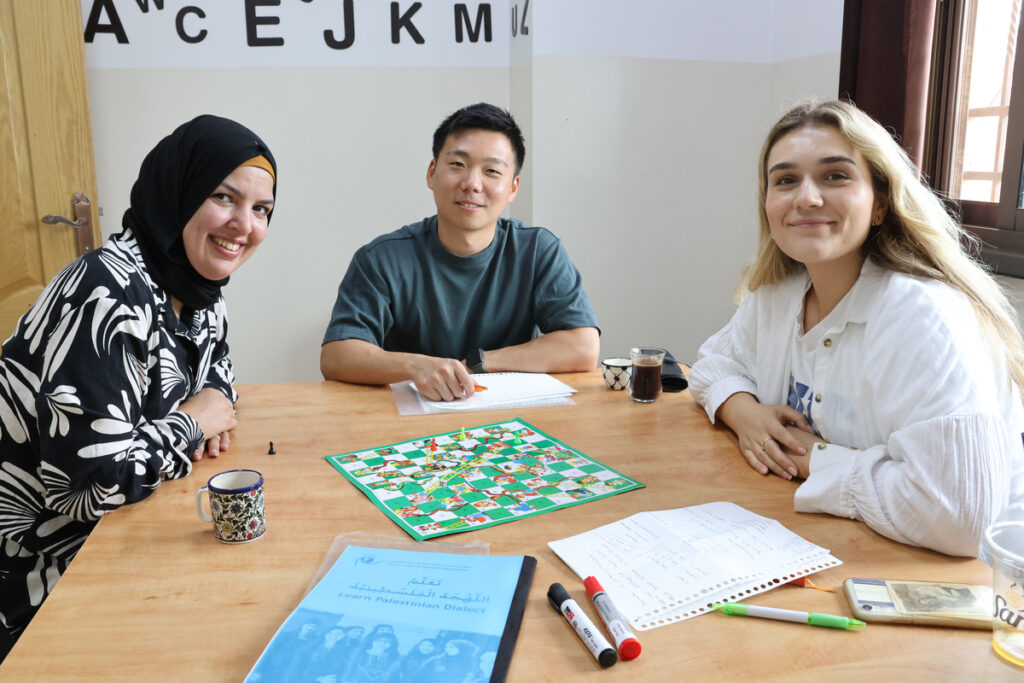
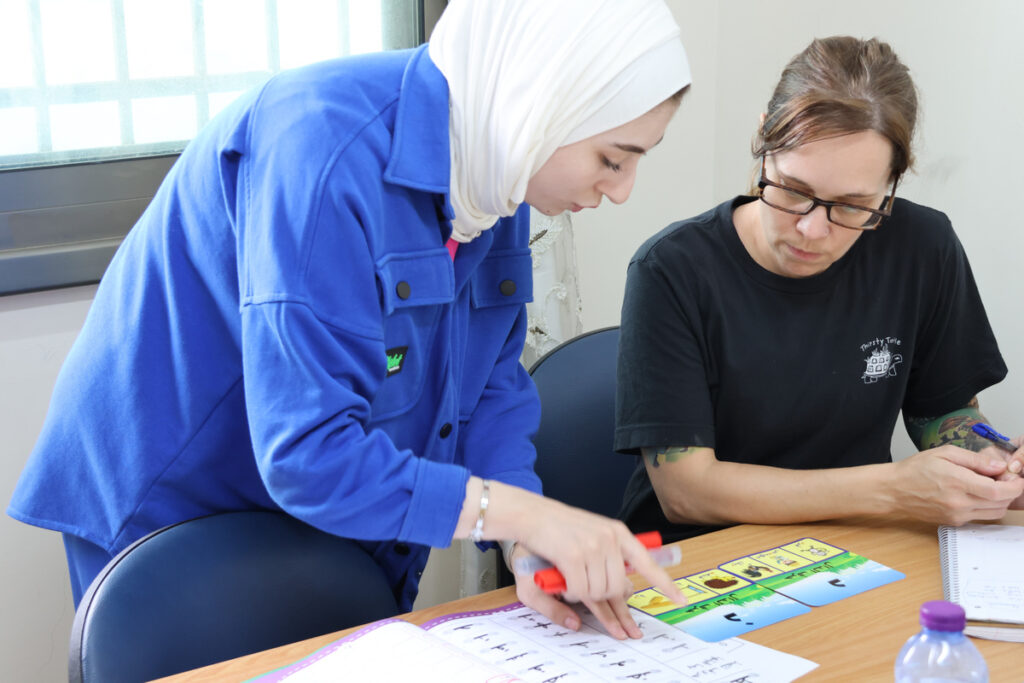
You can learn more about our online programs in this article.
Arabic for Specific Purposes (ASP) Programs
Want to learn Arabic for a specific purpose? There are plenty of tailored programs to help you develop the right language and vocabulary for your area of interest.
There are a few different types of Arabic for Specific Purposes programs available:
- Media Arabic for journalists and researchers. These programs will familiarise you with the language of the media, helping you to understand the headlines and the nuances of news in the region.
- Legal and Business Arabic for professionals. Do you run or work for a business with operations in the Middle East? Maybe you have a product with a primarily Arab audience? Learning Arabic for business can help make your business interactions much smoother.
- Religious Arabic for those studying Islamic or Christian texts. Many people learn Arabic for the specific purpose of reading or studying holy books. Learning religious Arabic can help you to achieve these goals.
Arabic Programs Abroad in Palestine 2026-2027
Here you can find the list of programs for studying Arabic in Palestine in 2026 and 2027.
1. Intensive Arabic Language Courses
The Intensive Levantine Arabic Program offered by the Levantine Arabic Institute is a unique opportunity for anyone looking to expand their spoken Arabic to include the Levantine dialect. With courses taking place in the vibrant city of Hebron, Palestine, the program is also a fantastic way to travel through the Levant while immersing yourself in Levantine culture, history, and politics.
Fortunately for those looking to study Arabic with us, our location is in the West Bank of Palestine, directly in the heart of the Levant. Therefore, our courses provide the perfect environment for immersion and mastery of the Levantine dialect. Moreover, as one of the most widely spoken Arabic dialects, mastering Levantine Arabic not only opens the doors to Palestine but is the ultimate gateway to the Arabic-speaking world.
2. Intensive Summer Arabic Program in Palestine
Summer Arabic Program: The Arabic Summer Immersion Program is an excellent opportunity for those seeking an intensive Arabic course during the summer in the West Bank, Palestine, Jordan, Lebanon, Syria, Israel, or the broader Middle East region. Recognized as one of the top Arabic language schools in Palestine, the Levantine Arabic Institute offers enriching summer Arabic courses suitable for all learners.
Whatever your reason, if you’re interested in learning Levantine Arabic (Shami dialect), our Summer Arabic Immersion Program is for you. With options for super-intensive and intensive immersion summer programs in dialects such as Levantine (Ammiya), Palestinian colloquial Arabic, and Modern Standard Arabic, the Levantine Arabic Institute welcomes all guests seeking to learn this beautiful language. Our students include undergraduates, graduates, professionals, and even retirees with abilities ranging from beginner to advanced.
3. Study Levantine Colloquial Arabic Program
The Intensive Levantine Arabic Program offered by the Levantine Arabic Institute is a unique opportunity for anyone looking to expand their spoken Arabic to include the Levantine dialect. With courses taking place in the vibrant city of Hebron, Palestine, the program is also a fantastic way to travel through the Levant while immersing yourself in Levantine culture, history, and politics.
Fortunately for those looking to study Arabic with us, our location is in the West Bank of Palestine, directly in the heart of the Levant. Therefore, our courses provide the perfect environment for immersion and mastery of the Levantine dialect. Moreover, as one of the most widely spoken Arabic dialects, mastering Levantine Arabic not only opens the doors to Palestine but is the ultimate gateway to the Arabic-speaking world.
4. Study Palestinian Colloquial Arabic Program
Study Palestinian Arabic: Enroll in our top-tier language program and study Palestinian Arabic at the Levantine Arabic Institute! We are well known as one of the best Arabic language schools in Palestine. Our strategic location in Hebron (an affordable and bustling city in the West Bank) creates an ideal atmosphere to learn the Ammiya Arabic dialect (This dialect is spoken throughout Syria, Lebanon, Palestine, and Jordan).

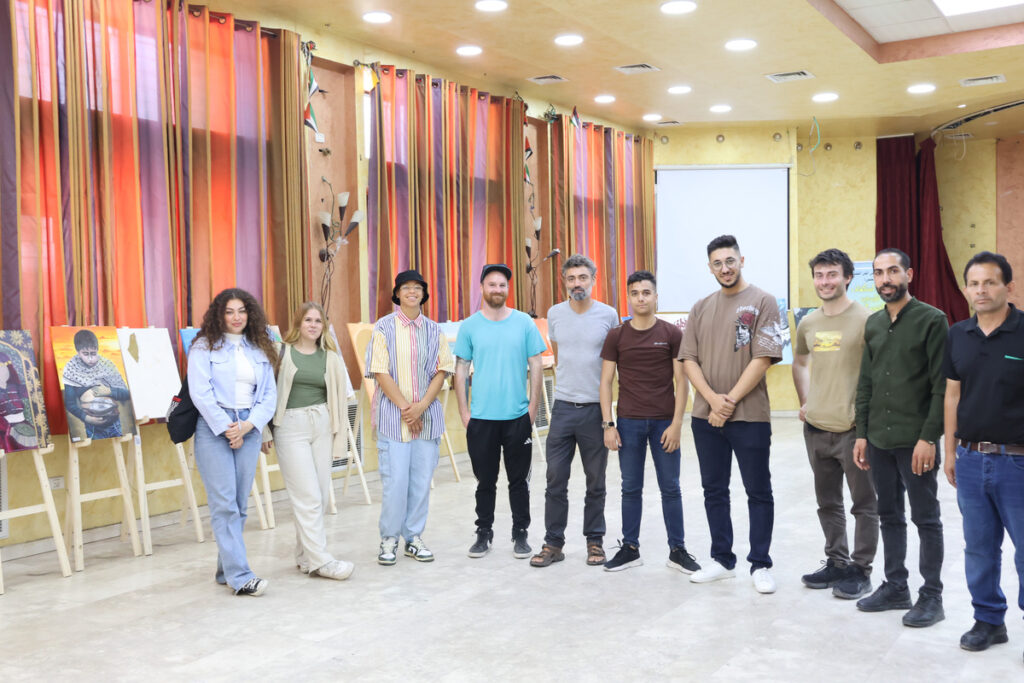
Our Study Palestinian Arabic Immersion Program offers a unique opportunity for those wishing to learn colloquial Palestinian Arabic. You will connect with the wider Palestinian diaspora on an intimate level and surround yourself in the diverse culture of Palestine/the greater Levant. This program is also designed for individuals who are interested in learning about the region’s rich history and culture. We also welcome those seeking to understand Palestine’s contemporary situation better and build genuine/impactful relationships.
5. Study Modern Standard Arabic Program
Study Modern Standard Arabic (1-13 Weeks): If you’re interested in learning Modern Standard Arabic (Fusha), our Intensive Arabic Language Program in the West Bank, Palestine, is the perfect fit for you, regardless of your motivation. The Levantine Arabic Institute offers super-intensive, intensive, and non-intensive immersion Arabic programs in Modern Standard Arabic, as well as dialects such as Levantine (Shami/Ammiya), and Palestinian colloquial Arabic.
Whether you’re an undergraduate, graduate, professional, or retiree, our Modern Standard Arabic language programs cater to your needs. Located in Hebron, West Bank, our Arabic language programs welcome learners of all levels, from beginners to intermediate and advanced. If you’re currently enrolled in a college or university, you may also earn academic credit towards your studies by participating in our Arabic immersion program.
6. One-on-One Private Arabic Courses
One-on-One Private Arabic Courses (Online & In-Person): the Levantine Arabic Institute offers personalized, one-on-one Arabic lessons in Palestinian Arabic, Levantine dialect (Levantine Arabic, also called Shami (autonym: شامي šāmi or اللهجة الشامية el-lahje š-šāmiyye), Modern Standard Arabic, and Ammiyya Arabic, available both online and in-person.
These private courses are perfect for students who prefer or require the focused attention of an instructor to support their language acquisition. Our tailored approach enables us to adapt teaching methods and materials to each student’s specific needs, ensuring an effective and engaging learning experience.
7. Study Arabic Online Program
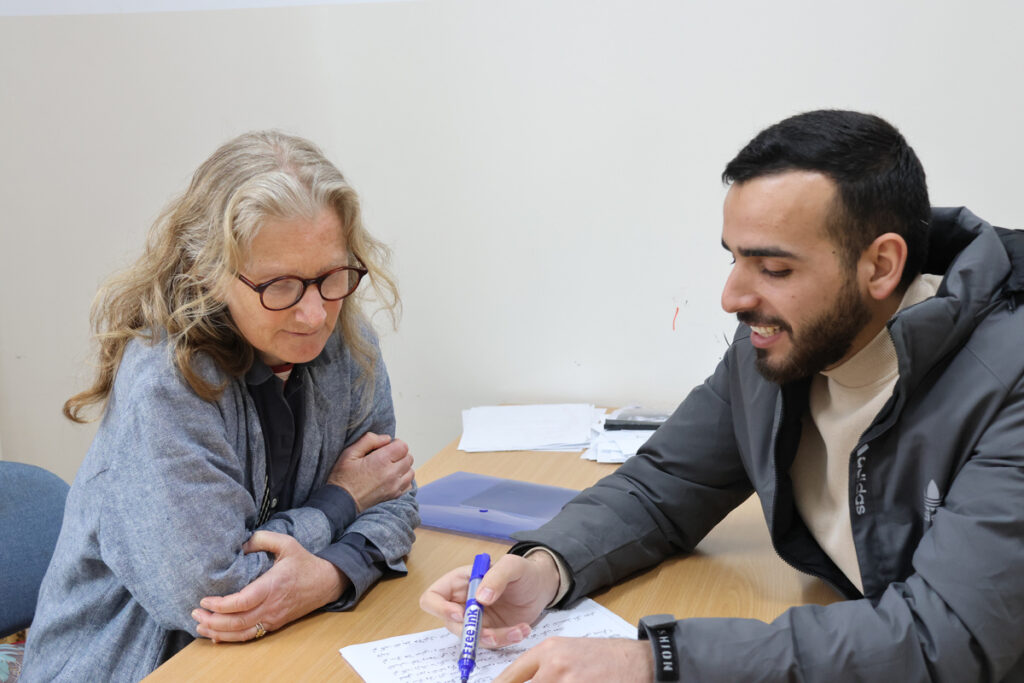
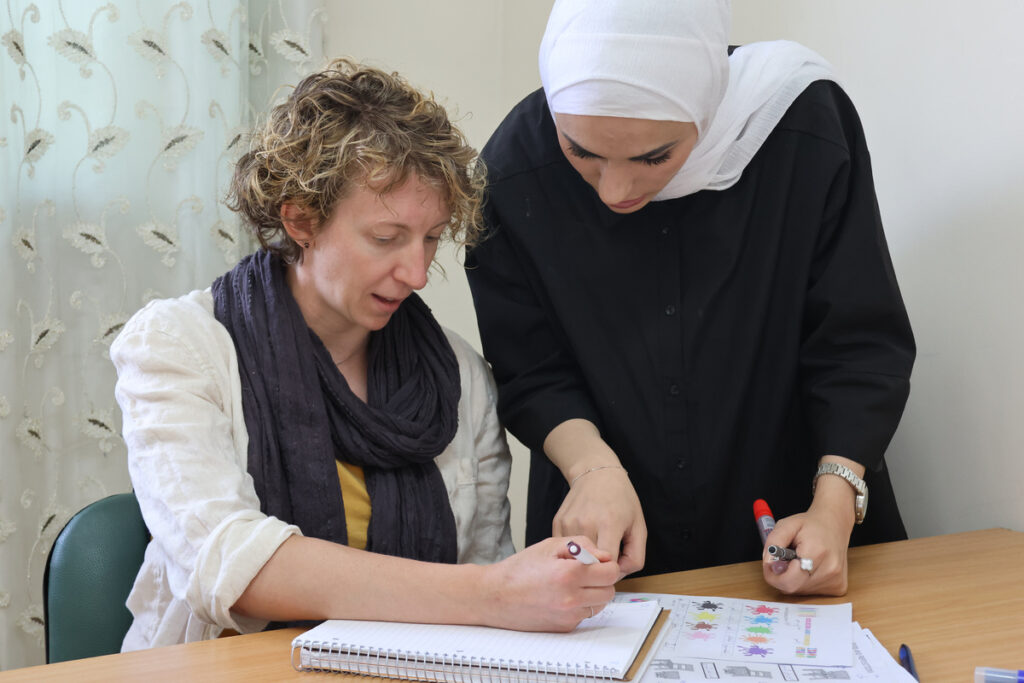
Online Courses: Welcome to the Levantine Arabic Institute, a learning platform based in Hebron, Palestine. Founded by young Palestinian educators, the platform offers high-quality instruction in colloquial Palestinian Arabic (Levantine) and Modern Standard Arabic (MSA) for non-native speakers. Our students come from various backgrounds, including journalists, academics, diplomats, NGO personnel, university students, and people of Palestinian and Arab origin, all eager to learn Arabic and explore Arab culture.
The Levantine Arabic Institute offers courses in Levantine Arabic (Ammiyya or Shami Arabic), which includes Palestinian, Jordanian, Syrian, and Lebanese dialects, as well as Modern Standard Arabic. Our programs are designed for beginners and focus on practical conversation and everyday vocabulary, making learning Arabic from the comfort of your home or workplace easy.
Application & Enrollment Process for 2026-2027
Who Can Apply?
When applying or enrolling for an Arabic program, it’s important to check the requirements of the course to make sure you qualify. This could include things like:
- Age requirements. Do you have to be between a certain age bracket (e.g, above 18) in order to apply?
- Academic background: Do you need to have completed a pre-requisite program, or have a particular level of Arabic already, to apply?
At the Levantine Arabic Institute, we take everyone from beginners onwards, and from 18 to 70 years of age. You don’t need any prior experience with Arabic or even in the Middle East region to come and study with us – we welcome anyone who wants to come and learn.
Once you have determined if you qualify for your chosen program, you can get into the application process!
Step-by-Step Application Guide
Finding your program
Finding the right program is an important first step. It’s not just about which country you want to study in or which dialect you want to learn – different language schools also have different styles of teaching, different course structures, and different levels of Arabic available.
Our recommendation is to look at testimonials from past students to gauge whether the program you’re looking at is right for you. If possible, find testimonials that are written and posted independently on the school’s website to get a really unbiased understanding of what they do. For example, the Levantine Arabic Institute has a 4.85 rating out of 5 on GoOverseas, from over 800 reviews.
Application requirements and deadlines
Before you apply for your Arabic program, make sure to check the course dates and application requirements of your chosen organisation to make sure this fits with your plans. The Levantine Arabic Institute doesn’t have application requirements or deadlines – your program starts when you arrive and ends when you leave, and the only requirement is that you are ready to learn!
Visa and travel considerations in 2026
Currently, in order to travel to Palestine, you need to secure a visa from Israel. Tourist visas are issued on arrival at the border and can last for up to 90 days, although the immigration officer you get may issue a visa for less time than this at their own discretion. As of January 1st, 2025, you will need to fill out an Electronic Travel Authorisation prior to departure.
There are two key crossings into the West Bank: a land crossing through Jordan at the King Hussein Bridge, or arriving at Israel’s Ben Gurion Airport just outside of Tel Aviv. Travel through Jordan is currently highly recommended, as many people have recently faced difficulty entering Israel through Ben Gurion Airport. The way takes a bit longer and is a bit more complicated, but there is generally a better chance that you will be granted entry.
We have an article outlining travel to Palestine with far more details. For more information, please reach out to our team at Info@studyarabic.org.
Life as an Arabic Student in Palestine
Daily Schedule & Language Practice
Not all learning happens in the classroom! When studying in Palestine, you’ll get the benefit of daily interactions with friendly locals in coffee shops and restaurants, or just walking down the street, where you can practice your Arabic. This helps you to take your language learning from the classroom and use it in real-life situations.


Daily schedules will vary from school to school, but at the Levantine Arabic Institute, we usually start our days with a Palestinian breakfast of bread, hummus, shakshuka, za’tar, tea, and coffee. It’s great brain food before we head to class for learning. Your teacher will guide you through the day’s content using a variety of interactive teaching methods, and likely set you some homework for the next day. Depending on the intensity level of your chosen course, you might also participate in some other activities around Hebron in the afternoon with the other students.
Accommodation Options
With in-person study, there are usually a few different accommodation options to suit your needs. For full immersion, you might stay with a local host family, where you will get daily exposure to Arabic language practice in real-world situations, along with the benefit of making new friends, eating home-cooked traditional food, and learning more about the local culture.
Another option might be to stay in a university dormitory or shared apartment. This is a great option for those who want a slightly more independent living arrangement, but who still want the social benefits of spending time with their fellow students. At the Levantine Arabic Institute, we offer modern, secure apartments – one for males and one for females in keeping with the local culture – just a short walk away from the campus.
Exploring Palestinian Culture
Language and culture are inexorably linked. Living and studying in Palestine is a great way to blend your language study with getting to know the culture of your new surroundings. You might participate in local events, visit holy sites, eat traditional foods, wander ancient marketplaces, and participate in religious activities (especially if you’re here during the holy month of Ramadan!).
Palestinian culture is also very rich in art, music, and poetry. In Ramallah, you have the opportunity to visit the museum and the resting place of the famous Palestinian poet Mahmoud Darwish. In Hebron, there are many local artists using mediums like paint, sculpture, and digital art to communicate with the world. In Bethlehem, you can visit the famous separation wall that splits the West Bank, and all of its famous graffiti (including some works from the world-famous Banksy).
Challenges & How to Overcome Them
Adjusting to a New Environment
People in Hebron are very friendly, and it is likely that you will be invited to people’s houses for coffee, a meal, or to meet their family. This is a great way to learn more about daily life and local food. One thing to keep in mind is that Hebron is quite a conservative city, so it is recommended for women and men to wear long, loose-fitting clothing in both summer and winter.
While in Palestine, you will also have the opportunity to travel on weekends if you wish! Local mini-buses called Services (pronounced Servees) take passengers from Hebron to different hubs in the West Bank, including Bethlehem, Jerusalem, and Ramallah. This public transport option is cheap and pretty easy to navigate, helping you to see many of the cultural and historical wonders of Palestine.
Safety & Travel Considerations
Travel in Palestine is generally very safe, and most people enjoy their time here without any problems. Like traveling anywhere, it is important to take some safety precautions, like having good health insurance and knowing the contact for the local emergency services. However, there are also some safety and security tips that are unique to traveling in Palestine.
The restriction of movement in the West Bank is a tactic of the Israeli occupation. Since October 7th and the January Ceasefire in Gaza, travel between cities in the West Bank has become incredibly difficult due to Israeli checkpoints, increased gates in and out of cities that can close at any time, and long wait times to enter or leave some areas. When you are planning your travel within Palestine, it is important to keep these restrictions in mind – a trip that should only take an hour can sometimes take over four, depending on the day.
Due to the current security situation, we recommend you keep an eye on the news and talk to the Center staff before travelling – some places, like Jenin in the north, are currently not possible to access because of increasing attacks and deteriorating security.
Success Stories & Testimonials
Learning Arabic in Palestine with the Levantine Arabic Institute is the best way to reach your language learning goals quickly. Don’t just take it from us, hear from some of our past students!
“I went to Hebron for a month in December 2024 and learned Arabic with Haya. I had just finished Arabic 101 at my university, but felt like I barely learned anything. Haya taught me more in 4 weeks than I learned in that entire 10-week course at my university.” – Genevieve, United States.
“I spent two months doing an intensive Arabic course (four hours a day) at the Levantine Arabic Institute. The Arabic classes were brilliant. My teacher, Saja, was brilliant! I was a complete beginner, and the amount of material we covered in two months was incredible. I will spend at least six months after this just going over what I have learned already to consolidate! I learned so much, and I have gained confidence in reading, writing, and speaking.” Alex, United Kingdom
Summary
Arabic is a rewarding and challenging language to learn. Choosing the right kind of Arabic, the right provider, and the right course for you can be difficult. That’s why the Levantine Arabic Institute makes it easy for people to come and learn Arabic in Palestine. Our range of Arabic courses suits people of any level, and our expert teachers make language learning a joy.
Don’t take our word for it! Hear from some of the hundreds of people who have come to spend time with us in Palestine. Want to learn more? Feel free to reach out to our friendly team at Info@studyarabic.org
Contact Us
Should you have any questions, please do not hesitate to contact us at:
WhatsApp: +972 599 479 880
Website: https://ecpalestine.org/
EC Website: https://excellencenter.org/
Instagram: https://www.instagram.com/excellence.center
Facebook page: https://www.facebook.com/ExcellenceCenter
